

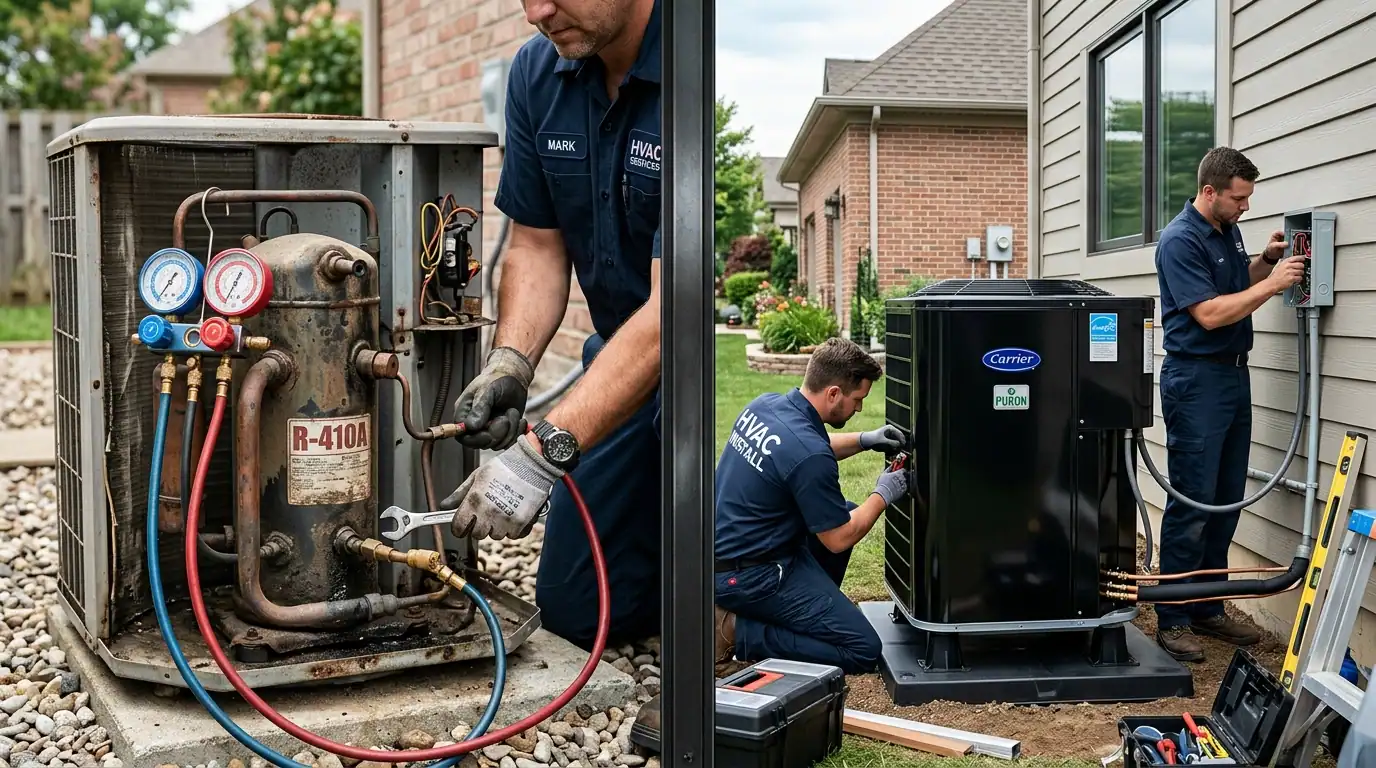
EXPERT REVIEW BLURB: This technical analysis has been developed by our senior HVAC/R specialists and reviewed for compliance with 2026 SEER2 efficiency standards and current refrigeration technical specifications. The data provided reflects current market trends for parts, labor, and operational energy modeling.
When a residential or light commercial 410A system experiences a compressor failure, the decision-maker: whether a facility manager or a homeowner: is faced with a critical financial crossroad. In the HVAC/R industry, this is often referred to as the "Cost-Benefit Crossover." Do you invest in a premium replacement compressor to breathe life into an aging unit, or do you transition to a modern, high-efficiency system?
At CedarsHVAC.com, we are COMMITTED to providing the data and components necessary for OPERATIONAL EXCELLENCE. Whether you are a professional HVAC contractor advising a client or a skilled DIYer performing a complex repair, understanding the long-term ROI is essential for a DELIGHTFUL EXPERIENCE and financial security.
THE REPAIR ROUTE: PRECISION REPLACEMENT WITH PREMIUM COMPONENTS
For systems that are less than 10 years old and have well-maintained coils, a compressor replacement remains a viable, cost-effective solution. By utilizing industry-leading brands like Carrier, GMCC Toshiba, and Danfoss, you ensure that the repair meets the original manufacturer's performance curve.
TECHNICAL SPECIFICATIONS: REPLACEMENT COMPRESSORS
When selecting a replacement, technical precision is non-negotiable. Our inventory focuses on high-performance rotary and reciprocating models designed for durability.
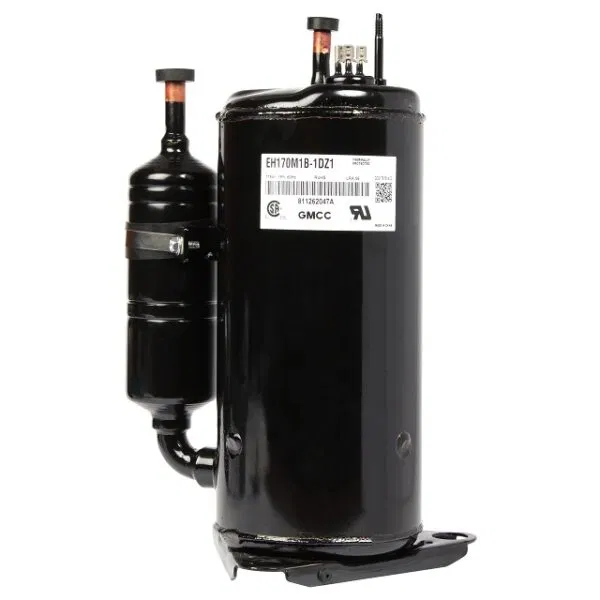
- RELIABLE BRANDS: Carrier, Bautzen, GMCC Toshiba, Danfoss.
- REFRIGERANT COMPATIBILITY: R-410A (Puron), R-134a, R-404A.
- ELECTRICAL RATINGS: 208-230V / 1Ph / 60Hz or 3-Phase commercial configurations.
- CAPACITY RANGE: 1.5 Tons to 5.0 Tons for residential split systems.
- THERMAL PROTECTION: Integrated internal overload protection.
- CONSTRUCTION: Hermetically sealed steel housing with copper suction and discharge lines.
- ACCESSORIES INCLUDED: Rubber mounting grommets and wiring harness terminals.
THE COST ANALYSIS: REPAIR
A standard compressor replacement for a 2.5-ton system typically ranges from $1,200 to $2,800 including parts and labor. If the unit is under a parts-only warranty, your customer may only be liable for labor and refrigerant costs, often bringing the total under $1,200.
SHOP NOW: Browse Our High-Efficiency Compressors
THE REPLACEMENT ROUTE: ACHIEVING LONG-TERM OPERATIONAL EXCELLENCE
In 2026, the landscape of HVAC efficiency has shifted dramatically. With the implementation of SEER2 standards, a full system replacement is no longer just a "new unit": it is an investment in energy reduction and future-proofing.

RUNTRU BY TRANE: THE DIFFERENTIATED ADVANTAGE
A full system upgrade, particularly with a RunTru by Trane central air conditioning system, provides a level of reliability that a patched repair simply cannot match.
- SEER2 COMPLIANCE: 14.3+ SEER2 ratings (equivalent to 15.2 SEER).
- SYSTEM INTEGRITY: Includes a brand-new indoor evaporator coil, outdoor condenser, and matching furnace or air handler.
- WARRANTY SECURITY: Up to 10 years of registered limited warranty coverage on all parts.
- QUIET OPERATION: Low-decibel fan blades and vibration-dampening compressor mounts.
- CORROSION RESISTANCE: All-aluminum coils to prevent formicary corrosion.
THE COST ANALYSIS: REPLACEMENT
A full system replacement in 2026 typically starts at $7,500 and can range up to $15,000 for high-efficiency, multi-stage configurations. While the upfront capital expenditure is significantly higher, the TRUST and peace of mind provided by a new warranty are often the primary drivers for homeowners.
THE DECISION MATRIX: REPAIR VS. REPLACE
To provide a CUSTOMER-CENTRIC recommendation, use the "50% Rule." If the cost of the repair (compressor + labor + refrigerant) exceeds 50% of the cost of a new system, replacement is technically and financially the superior choice.
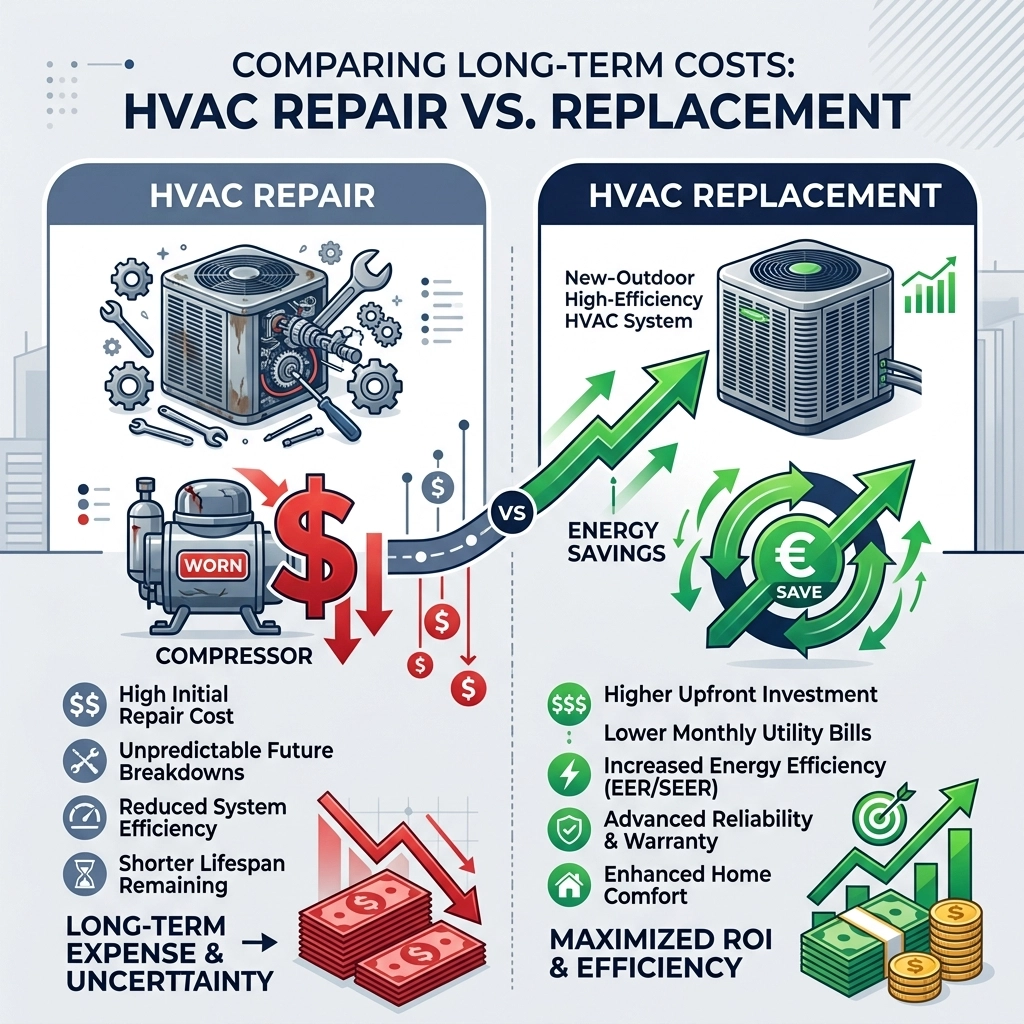
PERFORMANCE RATINGS COMPARISON
| Metric | Compressor Repair (10 SEER) | New RunTru System (14.3 SEER2) |
|---|---|---|
| Upfront Cost | $1,800 – $2,500 | $7,500 – $12,000 |
| Annual Energy Savings | $0 (Status Quo) | $350 – $450 (approx. 30% reduction) |
| Warranty Status | 1-Year (Part only) | 10-Year (Registered) |
| Reliability Rating | Moderate (Old coils remain) | High (New matched system) |
| Refrigerant Type | R-410A (Legacy) | R-454B or R-32 (Current Standards) |
THE CRITICAL ROLE OF SUPPORT COMPONENTS
Regardless of the choice, certain electrical components must be replaced during a compressor failure to ensure the longevity of the new parts. We recommend upgrading the heavy-duty HVAC contactor and adding a soft starter to reduce start-up torque.

CONCLUSION: MAKING THE RIGHT CHOICE FOR YOUR BUSINESS
At CedarsHVAC.com, we pride ourselves on being a KNOWLEDGEABLE partner for HVAC professionals. We understand that your reputation depends on the reliability of the parts you install.
- CHOOSE REPAIR if the system is under 8 years old, the coils are pristine, and the customer has a limited immediate budget.
- CHOOSE REPLACEMENT if the system is 12+ years old, uses obsolete R-22 (requiring a full retrofit), or if the customer prioritizes a lower monthly utility bill and long-term security.
We are SECURE in our ability to provide the highest-tier inventory for either path you choose. From GMCC Toshiba compressors to complete RunTru central systems, our logistics network ensures timely shipping to keep your projects on schedule.
GET STARTED TODAY: Sign Up for Contractor Pricing
PROFESSIONAL DISCLAIMER: The technical information and cost estimates provided in this article are intended for educational and informational purposes only. HVAC/R repairs and installations involve high-voltage electricity and pressurized refrigerants which pose significant safety risks. All work must be performed by a licensed and EPA-certified professional. CedarsHVAC.com assumes no liability for damages or injuries resulting from DIY attempts or improper installation. Consult your local building codes and manufacturer specifications before beginning any project.