

Expert Review Blurb: This technical integration guide has been rigorously reviewed by the CedarsHVAC.com product engineering department. Our team specializes in high-performance HVAC/R solutions, ensuring that every recommendation meets industry standards for operational excellence, thermodynamic efficiency, and long-term mechanical reliability.
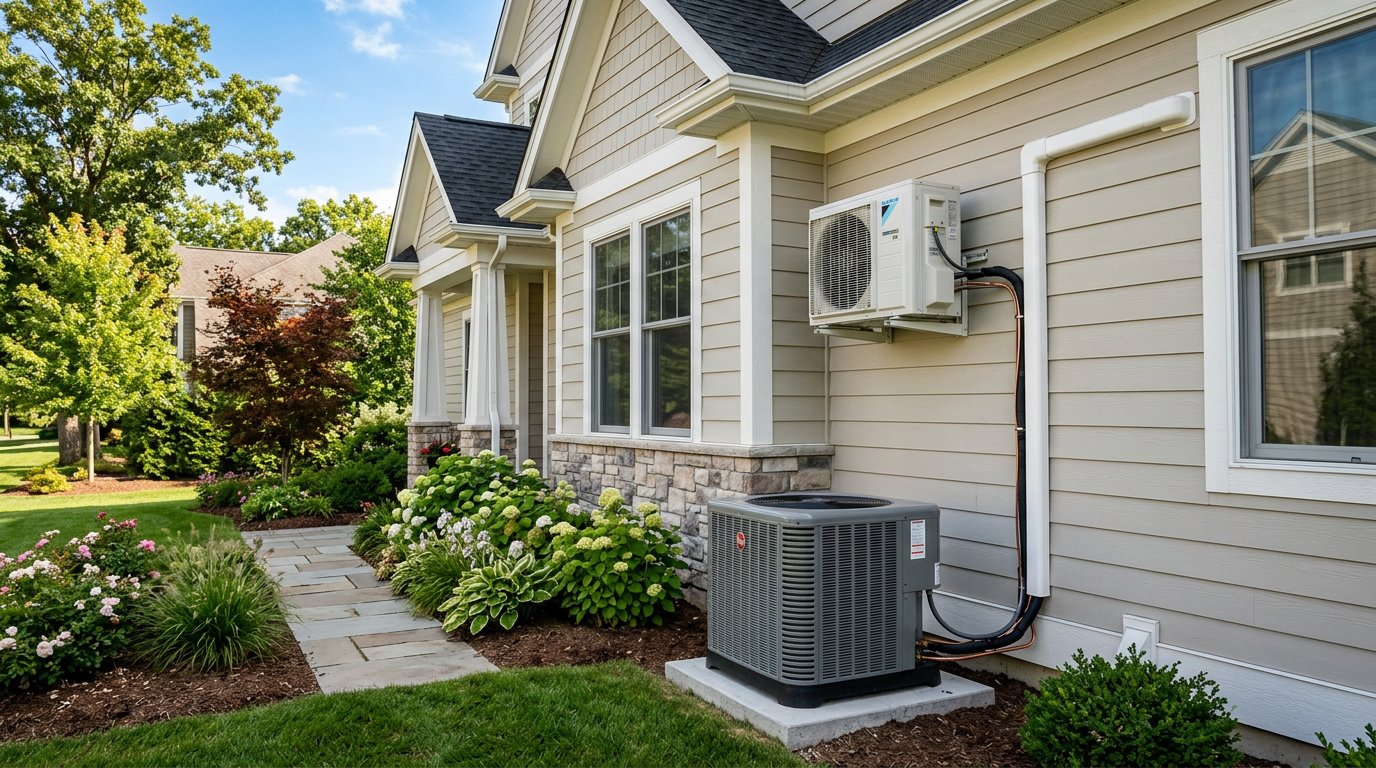
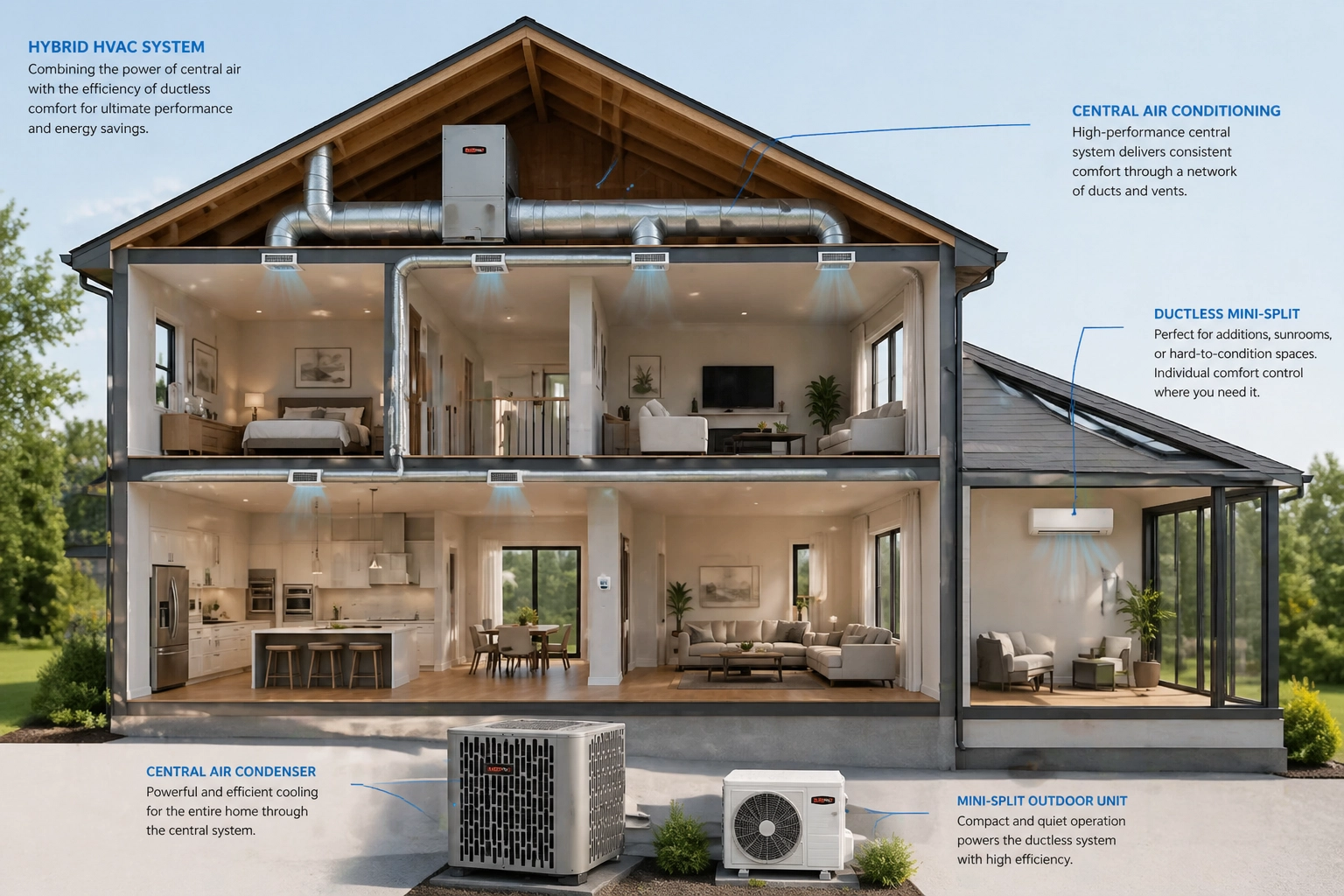
In the landscape of modern climate control, the quest for a "perfect" indoor environment often encounters the limitations of traditional architecture. Even the most robust central air conditioning systems can struggle with "hot spots," poorly insulated additions, or converted attic spaces. To address these challenges, industry leaders are increasingly turning to a hybrid approach: integrating ductless mini-split units with existing central A/C systems.
This differentiated strategy provides a customer-centric solution that maximizes comfort without the intensive labor and cost associated with ductwork expansion. At CedarsHVAC.com, we are committed to providing the knowledge and professional-grade equipment, such as RunTru by Trane central units, required to achieve this synergy.
THE HYBRID ADVANTAGE: OPERATIONAL EXCELLENCE IN COMFORT
Integrating a mini-split into a home already serviced by a central furnace or A/C unit isn't just about adding more cooling; it's about achieving operational excellence. A central system is designed for "mass" cooling, treating the entire house as a single thermal zone. However, variables like sun exposure, floor level, and ceiling height create differentiated cooling demands.
By adding a ductless mini-split, you introduce Zone Control. This allows you to:
- Target specific high-load areas: Cool a home office or sunroom independently.
- Reduce wear on the primary system: Avoid overworking your central compressor to cool one difficult room.
- Enhance energy efficiency: Operate only the units necessary for the occupied space.

STRATEGIC INTEGRATION: BRIDGING THE GAP WITH RUNTRU BY TRANE
When selecting equipment for a hybrid installation, reliability is paramount. We recommend utilizing trusted brands like RunTru by Trane for your central infrastructure. RunTru systems are engineered for durability and high-performance output, making them the ideal backbone for a multi-layered climate solution.
For the supplemental ductless component, contractors and DIYers should focus on systems that offer high SEER2 ratings and variable-speed inverter technology. This ensures that the mini-split operates with precision, subtly "polishing" the temperature in the target room while the central unit maintains the baseline temperature of the rest of the property.

TECHNICAL SPECIFICATIONS: HYBRID COMPONENT OVERVIEW
To ensure a successful integration, professionals must verify the technical attributes of both the existing and new equipment. Below is a detailed list of essential components and specifications often found in high-end hybrid configurations:
- Central Condenser (Outdoor):
- SKU: RunTru A4AC Series
- Compressor Type: Scroll or Rotary (Load dependent)
- Electrical: 208/230V, Single Phase, 60Hz
- Compatibility: R-410A or R-454B (model specific)
- Ductless Indoor Air Handler:
- Mounting: Wall-mounted, Ceiling Cassette, or Floor Console
- Fan Speeds: Multi-speed (High, Med, Low, Quiet)
- Filtration: High-efficiency washable filters
- Electrical Protection:
- Contactor: Heavy-duty 3-pole HVAC contactor for system switching.
- Soft Starter: Nu-Calgon NuStart Model 5010-21 to reduce startup amperage.
- Mounting Hardware:
- Galvanized Steel Air Handler Stands for primary units.
- Condenser wall brackets for mini-split outdoor units to prevent debris accumulation.
ENERGY EFFICIENCY AND ZONE CONTROL: A DIFFERENTIATED APPROACH
The primary driver for hybrid integration is often energy efficiency. Traditional central systems are "all-or-nothing." If your upstairs bedroom is 5 degrees warmer than the kitchen, your central unit must run long enough to cool that bedroom, often over-cooling the rest of the house in the process.
Adding a mini-split creates a differentiated cooling profile. By setting the central thermostat to a higher "base" temperature and allowing the mini-split to handle the specific load of the warm room, homeowners can realize significant savings on monthly utility bills. This delightful experience of precise climate control is what sets professional-grade installations apart from standard setups.
KEY DESIGN CONSIDERATIONS
- Sizing (BTU Load): Use our HVAC Sizing Guide & BTU Calculator to ensure you aren't oversizing the mini-split, which can lead to short-cycling and humidity issues.
- Placement: Indoor units should be placed where airflow is unobstructed. Outdoor units for the mini-split should be separated from the central condenser to ensure proper heat dissipation.
- Electrical Capacity: Ensure your service panel has the "Secure" capacity to add a new 220V circuit for the mini-split condenser.

INSTALLATION BEST PRACTICES FOR CONTRACTORS AND DIYERS
Whether you are a professional HVAC contractor or a highly skilled DIYer, integrating these systems requires attention to detail.
TRUST THE PROCESS: STEPS FOR SUCCESSFUL INTEGRATION
- SECURE THE MOUNT: Use a galvanized air handler stand for the central unit and heavy-duty brackets for the ductless unit.
- CHECK THE SEALS: Ensure all line sets are properly insulated. Use specialized refrigeration accessories to protect connections from vibration.
- FLUSH AND VACUUM: Every integration requires a deep vacuum (below 500 microns) to remove moisture and non-condensables, ensuring the longevity of your premium hermetic compressor.
- VOLTAGE VERIFICATION: Verify that the supply voltage matches the equipment's nameplate to prevent motor failure.
CONCLUSION: A COMMITMENT TO EXCELLENCE
At CedarsHVAC.com, we believe that climate control should be as flexible as the lives of our customers. Integrating mini-splits with central systems represents the pinnacle of modern HVAC strategy: combining the power of whole-home conditioning with the surgical precision of ductless technology.
SHOP NOW for the industry's most reliable A/C systems and accessories. We are COMMITTED to providing the expert knowledge and technical components you need to complete your hybrid installation with confidence.
GET STARTED TODAY and transform your home or facility into a model of energy efficiency and comfort.
Professional Disclaimer: The information provided in this guide is for educational purposes only. HVAC installations involve high-voltage electricity and pressurized refrigerants, which pose significant safety risks. We strongly recommend that all equipment installations and technical modifications be performed by a licensed HVAC professional. CedarsHVAC.com assumes no liability for damages or injuries resulting from DIY installations or the misuse of technical information.